Controller: We have all been there. You are in the zone, heart pounding, thumbs sweating. You just cleared a room full of enemies with a sliver of health left. You rush to the next door, ready for whatever is next, and then… the camera swoops away. The screen letterboxes. Your character starts talking without your permission. You put the controller down and pick up your phone.
That is the cutscene problem.
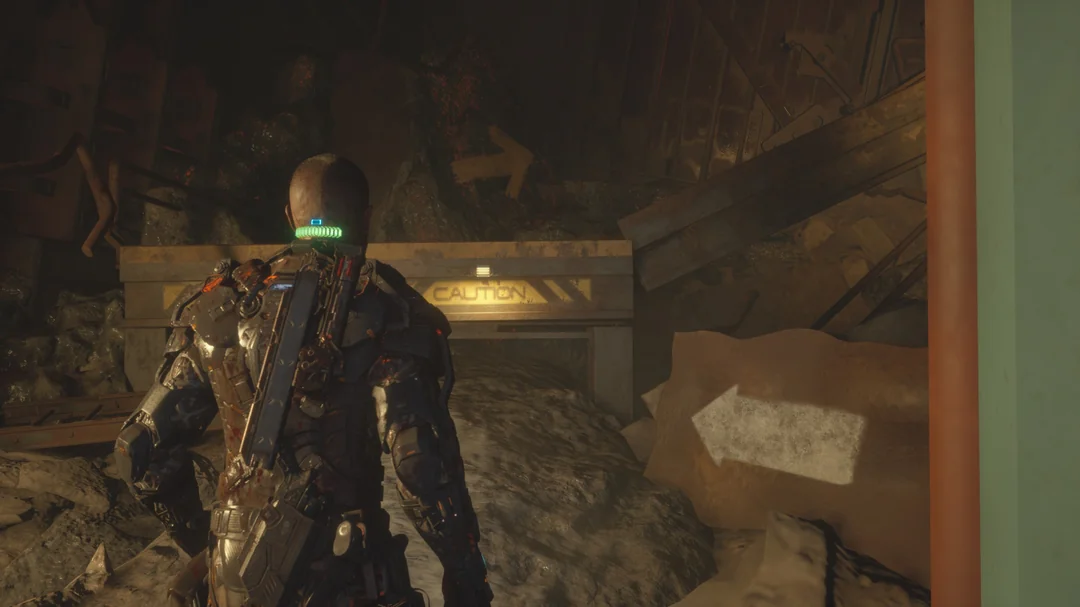
But then there is the other side. You walk into a room in a derelict spaceship. There is no dialogue. No camera cuts. Just a bloodstained wall, a flickering light, and a single coffee mug on the floor next to a recording device. You piece together what happened yourself. That is environmental storytelling.
Today, we are diving deep into the battle for immersion. Which one actually pulls you in? Is it the Hollywood-style movie in your game, or the silent clues left in the world? Let’s break it down without the fluff.
The Case for Cutscenes: Sometimes You Need a Director
I’m not going to lie and say all cutscenes are bad. They aren’t. Sometimes, you need the game to grab you by the collar and say, “Look at this!”
Cutscenes are the traditional way to tell a story. They give the developers total control. They pick the camera angle, the lighting, and the pacing. If they want you to cry when a character dies, they zoom in on the tears. You can’t miss it because you aren’t looking at a glitchy wall texture while it happens.
The Good, The Bad, and The Unskippable
When done right, a cutscene is a reward. It is a breath of fresh air after a hard fight. But when done wrong? It is a punishment.
Here is exactly when they work and when they fall flat:
| Feature | When It Works (The Good) | When It Fails (The Bad) |
| Pacing | Gives you a break after high-intensity gameplay. | Interrupts the flow right when you are having fun. |
| Information | Delivers crucial plot points clearly. | Dumps 10 minutes of exposition you don’t care about. |
| Emotion | Shows facial expressions and subtle acting. | Characters look stiff or the lip-sync is off. |
| Agency | Short and sweet, returns control quickly. | Quick Time Events (QTEs) that pretend you are playing. |
Why Developers Cling to Control
Developers love cutscenes because they are safe. If I am making a game, I want to make sure you know that the villain is actually the hero’s father. If I leave that info in a note on a desk, 50% of players will walk right past it. Cutscenes force you to see the vision.
However, this comes at a cost. The second the cutscene starts, I am no longer the hero. I am an audience member. The immersion breaks because I am reminded I am watching a screen, not living in a world.
Environmental Storytelling: The Silent Narrative
This is where the magic happens for me. Environmental storytelling is the art of placing props, textures, and items in a way that tells a story without saying a word. It respects your intelligence. It assumes you are smart enough to look around and figure things out.
Think about games like BioShock or Fallout. You enter a house. You see two skeletons on a bed holding hands. Empty pill bottles are on the nightstand. Nobody has to tell you what happened. You feel it. You realized the story yourself, which makes it stick in your brain way longer than a monologue.
The “Aha!” Moment
The best part of this method is the discovery. When you connect the dots, you feel like a detective. You aren’t just consuming content; you are participating in the history of the world.
Here is how environmental storytelling stacks up against the direct approach:
| Feature | Direct Storytelling (Cutscenes) | Environmental Storytelling |
| Player Role | Passive Observer (Watching) | Active Detective (Investigating) |
| Pacing | Halts gameplay completely. | Happens during gameplay (fluid). |
| Missability | Hard to miss (usually forced). | Very easy to miss if you rush. |
| Impact | Emotional through acting/music. | Emotional through realization/atmosphere. |
The Risk of Silence
The downside? It is risky. If you are the type of player who sprints from objective marker to objective marker, you are going to miss 90% of the story. You might finish the game thinking, “That had no plot,” simply because you didn’t look at the writing on the walls.
Breaking the Immersion: Ludonarrative Dissonance
That is a big, fancy word, but the concept is simple. It means the story tells you one thing, but the gameplay tells you another.
Imagine a cutscene where your character is crying over killing a deer. Then, gameplay starts, and you mow down 500 bad guys with a machine gun without blinking. That disconnect pulls you out of the experience.
Why Cutscenes Struggle Here
Cutscenes often create this dissonance. In the movie part, your character is weak and scared. In the game part, you are a superhero.
Environmental storytelling rarely has this issue. The story is embedded in the world you are actually playing in. If the world looks destroyed and dangerous, and you are fighting for your life, the story matches the gameplay perfectly.
Common Immersion Breakers:
- The “Wait, I could have done that” moment: A cutscene shows your character getting captured by a weak enemy you could have easily beaten.
- The sudden outfit change: You are wearing cool armor, but in the cutscene, you are back in the default outfit.
- The teleport: The cutscene ends, and suddenly, you are in a totally different location.
The Hybrid Model: Walk and Talk
The industry is smartening up. The best modern games are ditching the hard line between “playing” and “watching.” They are blending them.
Think of God of War (2018) or The Last of Us. They use the “Walk and Talk.” You are still moving the character, maybe solving a puzzle or walking down a path, and the characters are chatting. You learn the plot, but you never lose control of the camera. Your hands stay on the controller.
This keeps the flow state alive. You feel like you are inhabiting the character, not just puppeteering them between movies.
Comparing Story Delivery Methods
Let’s look at the different tools developers use to get info into your brain.
| Method | Immersion Level | Clarity of Story | Player Control |
| Pre-rendered Cutscene | Low (TV mode) | High (Exact details) | None |
| In-Engine Cutscene | Medium (Same graphics) | High | None |
| Walk and Talk | High | Medium (Can be distracted) | High |
| Audio Logs/Notes | Very High | Low (Fragmented) | Total |
| Visual Cues only | Maximum | Vague (Up to interpretation) | Total |
Troubleshooting Your Game Experience
Whether you are a gamer trying to enjoy a story or an aspiring dev trying to write one, things go wrong. Here is a quick guide on how to fix narrative issues.
For Players:
- Problem: You keep missing the story in games like Elden Ring.
- Fix: Slow down. Stop treating the game like a checklist. Look at item descriptions and the placement of enemies.
- Problem: Cutscenes are boring you to tears.
- Fix: Check settings for “subtitles only” and skip faster, or play genres that favor gameplay (like Roguelikes). You can find some wild, gameplay-first titles over at https://wackygame.com/.
For Developers (Hypothetical):
- Problem: Players are skipping your expensive cutscenes.
- Fix: Your cutscenes are too long or repetitive. Cut the dialogue in half. Show, don’t tell.
- Problem: Players don’t understand the villain’s motivation.
- Fix: Don’t hide the main plot in a diary entry located in a dark corner. Put the crucial environmental clues in the main path, lit by a spotlight.
| Symptom | Diagnosis | Potential Cure |
| Player spamming ‘A’ button | Dialogue is bloated/boring. | Edit script. Make text appear instantly. |
| Player confused about where to go | Environment is too cluttered. | Use lighting to guide the eye (yellow paint trick). |
| Player ignores lore items | Rewards are too low. | Make finding lore give XP or unique items. |
Frequently Asked Questions (FAQs)
1. Is environmental storytelling cheaper to make than cutscenes?
Not always. While you save money on voice actors and motion capture, you spend a lot more time on level design and asset placement. Placing a thousand unique items to tell a coherent story takes a massive amount of planning and detail work.
2. Can a game have a good story without any cutscenes?
Absolutely. Half-Life is the classic example. You never leave the first-person perspective. Dark Souls is another. The story is deep and rich, but you have to dig for it in the world and item descriptions. It proves you don’t need a movie to make people care.
3. Why do some games still use unskippable cutscenes?
Often, the game is loading the next level in the background. The cutscene is a mask to hide a loading screen. Other times, the director just has an ego and forces you to watch their “vision.”
4. Which genre does environmental storytelling best?
Horror and RPGs. In horror, not knowing what is happening adds to the fear, so piecing it together from clues is terrifyingly effective. In RPGs, exploration is key, so rewarding that exploration with story makes perfect sense.
The Verdict
So, which pulls you in more?
For me, environmental storytelling wins the immersion war. When I have to work on the story, I value it more. I feel like I am living in the world rather than visiting it. Finding a hidden room that reveals a secret about the game world feels like a personal victory.
Cutscenes have their place—they are great for big explosions and emotional climaxes—but they are a passive experience. Video games are an active medium. The more the storytelling leans into that activity, the better the game usually is.
If you want to watch a movie, open Netflix. If you want to be part of a world, look for the games that let the walls do the talking.